
10.0.0.1 – Login
The 10.0.0.1 IP address is an essential part of home and business network configurations. It acts as a default gateway to access the admin page of many routers, allowing users to manage network settings.
This IP address is primarily used in private networks and is often associated with popular router brands like Cisco, Xfinity, and Arris.
Understanding how to access and configure your router via 10.0.0.1 is crucial for network security, performance improvements, and overall control of your internet connection.
What is 10.0.0.1?
10.0.0.1 is a private IP address that many routers use as their default gateway. It’s a part of the IPv4 address range reserved for private networks. Unlike public IP addresses, which can be accessed by anyone on the internet, 10.0.0.1 is confined to your local network.
When you enter 10.0.0.1 into a browser’s address bar, you gain access to your router’s admin panel. This panel allows you to configure settings like Wi-Fi names (SSID), security protocols, and port forwarding.
How to Access Your Router’s Admin Panel Using 10.0.0.1
To access your router’s admin panel, follow these simple steps:
- Connect to your network: Ensure that your device (PC, laptop, or smartphone) is connected to the router’s network, either via Ethernet or Wi-Fi.
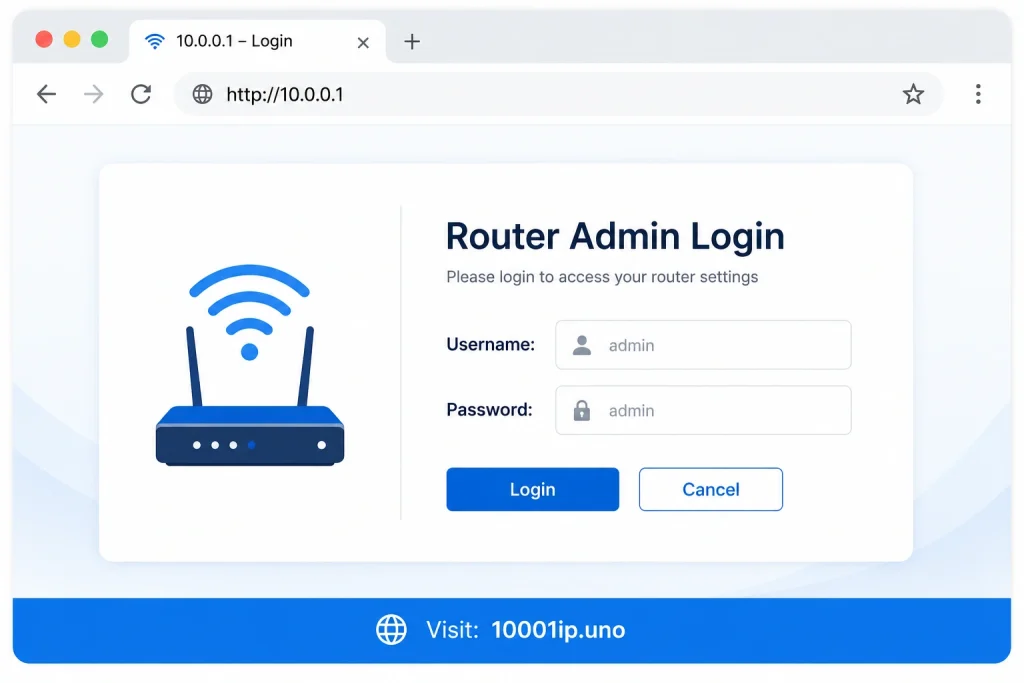
- Open a browser: Open any browser on your connected device and type http://10.0.0.1 in the address bar.
- Enter login credentials: A login page will appear. By default, the username and password might be something like:
- Username: admin
- Password: admin
You can find these details on the back of your router or refer to your router’s manual.
- Access the admin panel: After successfully logging in, you’ll be taken to the admin panel where you can manage settings.
If you have changed your router’s password and can’t remember it, you might need to reset your router to factory settings.
Finding Your Router’s IP Address: Alternative Methods
If 10.0.0.1 doesn’t work or you are unsure about your router’s IP address, here are several ways to find it:
- On Windows: Open the Command Prompt and type
ipconfig. Look for the Default Gateway, which will show you the router’s IP address. In most cases, this will be 10.0.0.1, but if it’s different, use the listed address. - On Mac: Go to System Preferences > Network > Advanced > TCP/IP. The Router field will show the IP address.
- On Mobile: Go to your Wi-Fi settings, tap on the network you’re connected to, and then check the Router or Gateway address in the details.
Common Default Logins for 10.0.0.1
If you are unsure of the default login credentials for your router, the following are some common ones:
- Username: admin | Password: admin
- Username: admin | Password: password
- Username: cusadmin | Password: highspeed
- Username: Cisco | Password: Cisco
These details can typically be found on the back of the router, on a sticker. If these don’t work, you might have to reset your router to default settings.
How to Change Your Router’s Settings After Login
Once you’re logged in 10.0.0.0.1, you can start making changes to optimize your network. Here’s how you can make some common adjustments:
- Change the Wi-Fi Name (SSID): You can personalize your network by changing the SSID (network name) under the Wireless Settings section. This helps identify your network and makes it unique.
- Set a Stronger Password: Change the default password to something more secure. Avoid simple passwords and use a mix of numbers, letters, and special characters.
- Update Firmware: Check for firmware updates in the System Settings. Keeping your router up to date ensures security patches and performance improvements.
- Configure Security Settings: Set up WPA3 or WPA2 encryption for your Wi-Fi network to prevent unauthorized access.
- Set Up Port Forwarding: If you need to run a server or make certain services accessible from the internet, you can set up port forwarding.
Using the 10.0.0.1 IP Address for Network Management
Once logged into the router’s admin panel, you gain access to advanced settings. Here’s what you can do:
- Assign Static IPs: For better control over your devices, assign static IPs to important devices like printers, security cameras, or gaming consoles.
- Configure Network Traffic: You can prioritize network traffic (QoS) for critical devices or applications, ensuring smooth streaming or gaming experiences.
- Monitor Network Usage: Some routers allow you to monitor the devices connected to your network, and some even let you set bandwidth limits for specific devices.
How to Change Your Wi-Fi Name (SSID) Using 10.0.0.1
Changing your Wi-Fi SSID (network name) is one of the first things you should do to personalize and secure your network. Here’s how:
- Login to the admin panel using 10.0.0.1.
- Navigate to the Wireless Settings or Wi-Fi Settings.
- Look for the field labeled SSID or Network Name.
- Enter a new name for your Wi-Fi network.
- Save the settings and restart your router.
Setting Up Parental Controls and Access Restrictions
Most modern routers offer parental controls that let you manage what content is accessible to different devices on your network. Here’s how to set them up:
- Login to the router’s admin panel.
- Look for the Parental Controls or Access Restrictions section.
- Set up filters for websites, block specific URLs, or restrict internet access during certain hours.
This is a useful feature for ensuring kids are not accessing inappropriate content or for limiting internet usage.
Conclusion
Accessing and managing your router via 10.0.0.1 is essential for securing and optimizing your home or office network. By understanding how to log in, change settings, and troubleshoot issues, you can ensure a safer and more efficient internet experience. Always remember to change default login credentials and regularly update your router’s firmware to maintain network security.