
192.168.1.1 Address
192.168.11 is one of the most commonly used IP addresses in home networking. It serves as the default gateway to access your router’s administrative settings. For most router brands like D-Link, TP-Link, and Linksys, this address is the key to configuring your network.
By logging into this IP address, you can change various settings, monitor network activity, and optimize your internet connection. Whether you want to set up a secure Wi-Fi network or troubleshoot connectivity issues, understanding 192.168.1.1 is essential for every home network user.
What is 192.168.1.1?
192.168.1.1 is a private IP address within the range reserved for Local Area Networks (LANs). It is not accessible from the public internet but works within the confines of your home or office network.
Routers use this IP to manage the devices connected to your network, making it possible for all devices to communicate efficiently. When you type 192.168.1.1 into your browser, it redirects you to your router’s admin page, where you can make necessary changes to your network’s settings.
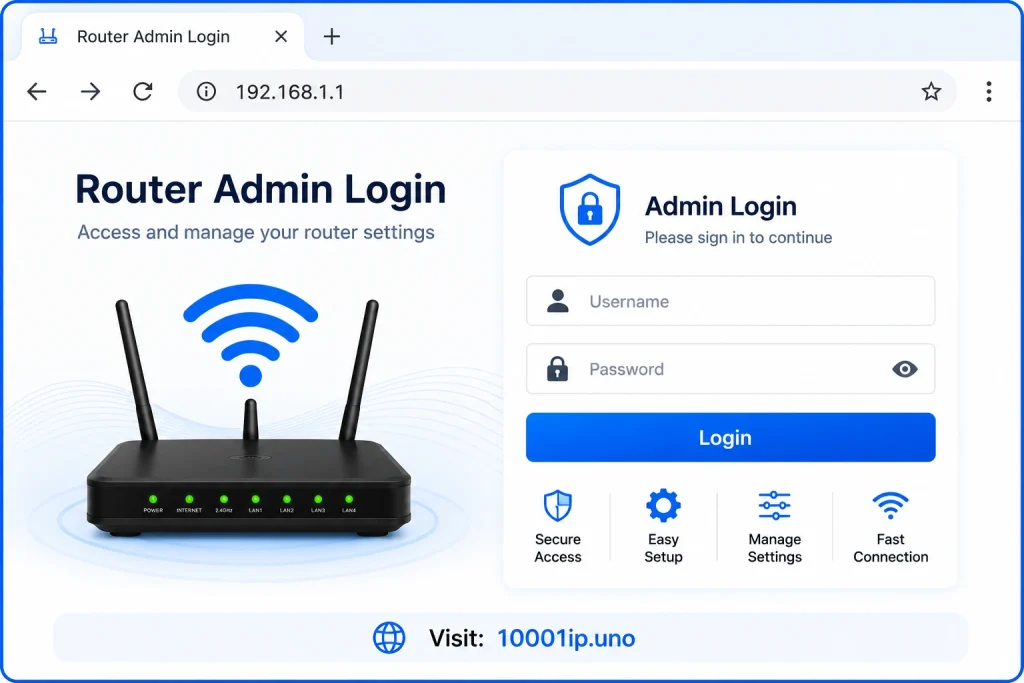
How to Access Your Router Admin Page via 192.168.1.1
Accessing your router’s admin page is simple and straightforward. Here’s how you can do it:
- Connect to Your Network: Ensure that your device is connected to your router, either via Wi-Fi or Ethernet cable.
- Enter the IP Address: Open any web browser (Chrome, Firefox, Safari) and type
192.168.1.1in the address bar. - Login Prompt: Once the router login page appears, you’ll be asked for a username and password. Enter the default credentials or the ones you’ve set up earlier.
- Access the Admin Panel: After logging in, you’ll be taken to the router’s control panel, where you can customize various settings, such as your Wi-Fi network name (SSID), password, security features, and more.
Router Login Information
Find the default login credentials for your router below. These are the most common default logins used for 192.168.1.1.
| IP Address | Username | Password | Frequency |
|---|---|---|---|
| 192.168.1.1 | admin | admin | 60% |
| 192.168.1.1 | admin | – | 10% |
| 192.168.1.1 | admin | password | 10% |
| 192.168.1.1 | admin | 1234 | 4% |
| 192.168.1.1 | 1234 | – | 2% |
- Important Notes:
- If the page doesn’t load, make sure the device is correctly connected to the router and that the IP address is correct.
- If your browser doesn’t recognize the IP address, check for common typing errors (e.g., 192.168.l.l instead of 192.168.1.1).
Common Default Logins for 192.168.11
Many routers have preset default login credentials, which are often listed in the router’s manual or printed on the device itself. Here are some common default username and password combinations for 192.168.1.1:
- Username: admin, Password: admin
- Username: admin, Password: password
- Username: admin, Password: 1234
- Username: admin, Password: (blank)
Troubleshooting Login Issues on 192.168.1.1
Error Messages Explained
When you try to access the router login page and encounter error messages like “Incorrect password” or “Login failed,” it usually indicates that either the username or password entered is incorrect. Sometimes, this can happen if the login credentials were changed and you haven’t updated them.
Common Login Problems and Solutions
- Forgotten Credentials: If you’ve forgotten your login credentials, try checking the back of the router or consult the manual for default logins.
- IP Address Confusion: Ensure that you’re entering the correct IP address and not a typo like 192.168.l.l (with an “L” instead of “1”).
- Firewall or Network Blocking: Firewalls may prevent access to the router page. Ensure any firewall is temporarily disabled for troubleshooting.
Firewall Settings and Their Effect on Router Access
Sometimes, a router can’t be accessed due to firewall restrictions. Firewalls may block certain ports or IP addresses, preventing you from logging in.
How to Disable or Configure Firewalls
- On Your Computer: You can temporarily disable your computer’s firewall through the control panel or system settings to troubleshoot access issues.
- On Your Router: If the router’s built-in firewall is causing problems, you may need to log into the router’s admin panel via 192.168.1.1 and adjust the firewall settings to allow access.
Using 192.168.1.1 to Change Router Settings
Once logged into your router’s admin page, you can change a variety of settings, including:
- Wi-Fi Network Name (SSID): You can change the default Wi-Fi name to something more recognizable for easier identification.
- Password Settings: It’s important to change the default Wi-Fi password to a stronger one for added security.
- Network Security: Enable WPA3 encryption (if available) to secure your Wi-Fi network and prevent unauthorized access.
Tips for Creating a Secure Password
- Use a Combination of Characters: Include uppercase, lowercase letters, numbers, and symbols to make the password harder to crack.
- Avoid Common Words: Steer clear of easily guessable words like “password” or “123456.”
- Use a Password Manager: If you’re worried about remembering complex passwords, consider using a password manager.
Conclusion
Understanding how to access and configure your router using the 192.168.1.1 IP address is crucial for maintaining a secure and efficient home network. Whether you’re troubleshooting issues, updating settings, or enhancing security, mastering the admin page of your router is essential. Regularly change your passwords, update your router firmware, and keep your network optimized for the best performance. By following these steps, you’ll ensure a smoother and more secure online experience for all your connected devices.