
192.168.0.1 Login
If you are trying to manage your router settings, you’ll likely need to access its admin page. One of the most common IP addresses used for router admin access is 192.168.0.1.
What is 192.168.0.1
192.168.0.1 is a private IP address used by many router brands, including Netgear, D-Link, and others. This IP serves as the default gateway to access the router’s admin panel, where you can change settings like your Wi-Fi password, network name, security options, and more.
Private vs. Public IP Addresses
- Private IP Addresses: These are used within a local network (like your home or office). 192.168.1.1 is part of the reserved IP address range, so it’s not reachable from outside your network.
- Public IP Addresses: Assigned by your ISP, these addresses are unique globally and allow your device to connect to the internet.
How to Login to Your Router Admin Panel Using 192.168.0.1
Step 1: Connect to Your Router’s Network
Before you can log into the router’s admin page, make sure your device (laptop, phone, or desktop) is connected to the router. You can connect via:
- Wi-Fi: Select the network from your available Wi-Fi networks.
- Ethernet Cable: For a more stable connection, use an Ethernet cable to directly connect your device to the router.
Step 2: Enter 192.168.0.1 in Your Browser
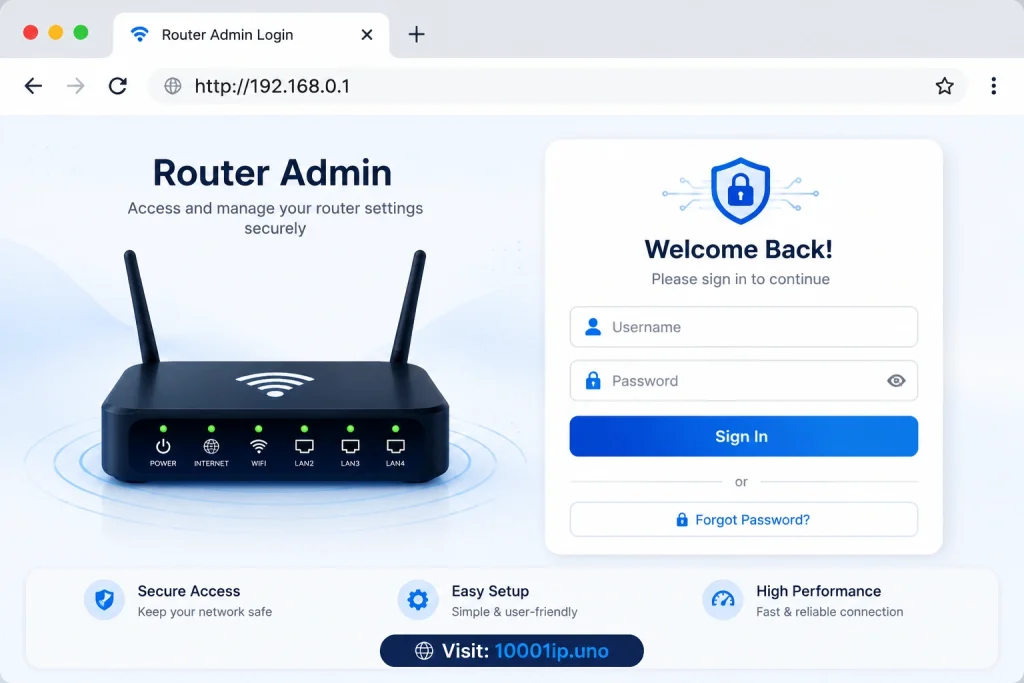
Once you’re connected to the router network, open your web browser (Google Chrome, Mozilla Firefox, Safari, etc.). In the address bar, type http://192.168.0.1 and press Enter. If you see an error, it may mean your router uses a different IP address. In that case, refer to the router’s manual or check the default gateway settings on your device.
Default Login Credentials for 192.168.0.1
Once you’ve accessed the login page, you’ll be prompted to enter the username and password. Here are the most common default credentials for routers using the 192.168.1.1 address:
| IP Address | Username | Password | Frequency |
|---|---|---|---|
| 192.168.0.1 | admin | admin | 43% |
| 192.168.0.1 | admin | password | 20% |
| 192.168.0.1 | – | admin | 17% |
| 192.168.0.1 | – | admin | 7% |
| 192.168.0.1 | admin | – | 4% |
If these don’t work, check your router’s manual or sticker on the back of the router for the correct default credentials.
Configuring Your Router After Login
Once you successfully log in to the admin panel, you can begin customizing your router settings. Here are some common tasks you might want to perform:
Change Your Router’s Login Information
For security purposes, it’s important to change the default admin username and password immediately. To do this:
- Go to Settings.
- Look for the Admin Settings or Security section.
- Enter a new username and password.
Modify Your Router’s IP Address
You can change the local IP address of your router (e.g., to 192.168.1.1) through the Network Setup section of your router’s settings. This can help avoid IP conflicts or improve security by making your router less predictable.
Set Up Parental Controls
If you want to restrict access to certain websites or limit internet usage for children, most routers offer parental controls. You can set up filters to block inappropriate content or limit screen time.
Update Router Firmware
Updating the router’s firmware ensures you have the latest security features and performance improvements. Visit your router manufacturer’s website to download the latest firmware, then upload it through the Firmware Update section in your router’s admin panel.
Restart or Reset Your Router
If you’re facing connectivity issues or need to reset your router to its factory settings:
- Restart: Unplug the router, wait 1 minute, and plug it back in.
- Reset: Use the reset button on the router (note that this will erase all settings).
Why You Should Secure Your Router
Securing your router is essential to protect your network from unauthorized access and cyber threats. Here are some basic security measures you should consider:
- Change the Default Password: As mentioned earlier, change the default admin username and password to something more secure.
- Enable WPA3 Encryption: For Wi-Fi security, choose WPA3 encryption, which is the latest and most secure protocol.
- Disable Remote Management: Unless absolutely necessary, disable the remote management feature to prevent hackers from accessing your router from outside your network.
- Update Firmware Regularly: Always keep your router’s firmware up to date to patch any vulnerabilities.
Common FAQs About 192.168.0.1
What is 192.168.0.1?
192.168.0.1 is a private IP address often used by many router manufacturers, like Netgear and D-Link, to access their admin interface for configuration and management.
How Do I Log In to 192.168.1.1?
To log in, open your browser, type http://192.168.0.1 in the address bar, then enter your router’s username and password (usually admin/admin by default).
What Are the Default Login Credentials for 192.168.1.1?
Most routers use:
- Username: admin
- Password: admin or password
If these don’t work, refer to the router’s label or manual for the default login details.
Can I Change the IP Address on 192.168.0.1?
Yes, you can change your router’s IP address in the Network Setup section. This is useful for avoiding conflicts or improving security.
How Can I Set Up Parental Controls on 192.168.0.1?
Log in to the admin panel, find the Parental Controls section, and set up filters to block harmful content or restrict internet usage for your children.
What Is the Difference Between a Private and Public IP Address?
Private IP addresses (like 192.168.0.1) are used within a local network, while public IP addresses are globally unique and assigned by your ISP for internet access.
What is the Default Gateway for 192.168.0.1?
The default gateway is the address your router uses to route traffic between your local network and the internet. In most cases, 192.168.1.1 is the default gateway for many routers.