

Router Security Checklist Tool
Wireless routers are an important part of daily internet usage for homes, offices, gaming, streaming, and smart devices. Weak router security can allow hackers, unknown users, and malware to access private internet connections and personal online information easily.
A Router Security Checklist Tool helps users improve wireless network safety using simple and beginner-friendly security methods. It guides users in protecting WiFi connections, securing router settings, and reducing online security risks more effectively and safely.
Router Security Checklist Tool
Check your router security score and get simple safety tips to protect your WiFi network.
Select Your Router Security Settings
What Is a Router Security Checklist Tool?
A Router Security Checklist Tool is an online utility that helps users improve wireless router protection and internet security easily. It provides important security recommendations for protecting WiFi networks, blocking unauthorized access, and managing safe router settings properly online.
The tool also helps beginners understand common wireless security risks and improve router privacy without advanced technical knowledge. Users can check password strength, update router settings, remove unknown devices, and improve internet safety for connected devices more effectively.
Why Router Security Is Important for Internet Safety
Strong router security helps protect wireless networks, connected devices, and private online information from cyber threats and unauthorized access.
- Secure routers help block unknown users from accessing private wireless internet connections without permission safely.
- Strong WiFi security reduces hacking risks affecting personal data and connected smart devices regularly online.
- Router protection helps improve internet privacy and prevents unauthorized bandwidth usage by unknown network users.
- Updated router security settings improve wireless network stability and overall internet performance for daily activities.
- Secure internet connections help protect online banking, streaming accounts, and personal browsing information safely online.
- Better router security also reduces malware risks affecting connected computers, phones, and smart home devices.
Most Common Router Security Mistakes Users Make
| Common Router Security Mistake | Why It Creates Security Risks |
|---|---|
| Using default router passwords | Hackers can easily access publicly available default login details |
| Creating weak WiFi passwords | Simple passwords increase unauthorized wireless network access risks |
| Ignoring router firmware updates | Outdated firmware may contain security vulnerabilities and software bugs |
| Sharing WiFi passwords publicly | Unknown users may misuse internet connections and reduce network security |
| Keeping remote access enabled | Remote access may allow outside users to target router settings |
| Never checking connected devices | Unknown devices may secretly use internet and access private networks |
| Disabling wireless encryption settings | Unencrypted networks are easier for hackers to monitor or attack |
| Placing routers in insecure locations | Easy physical access may allow unauthorized router setting changes |
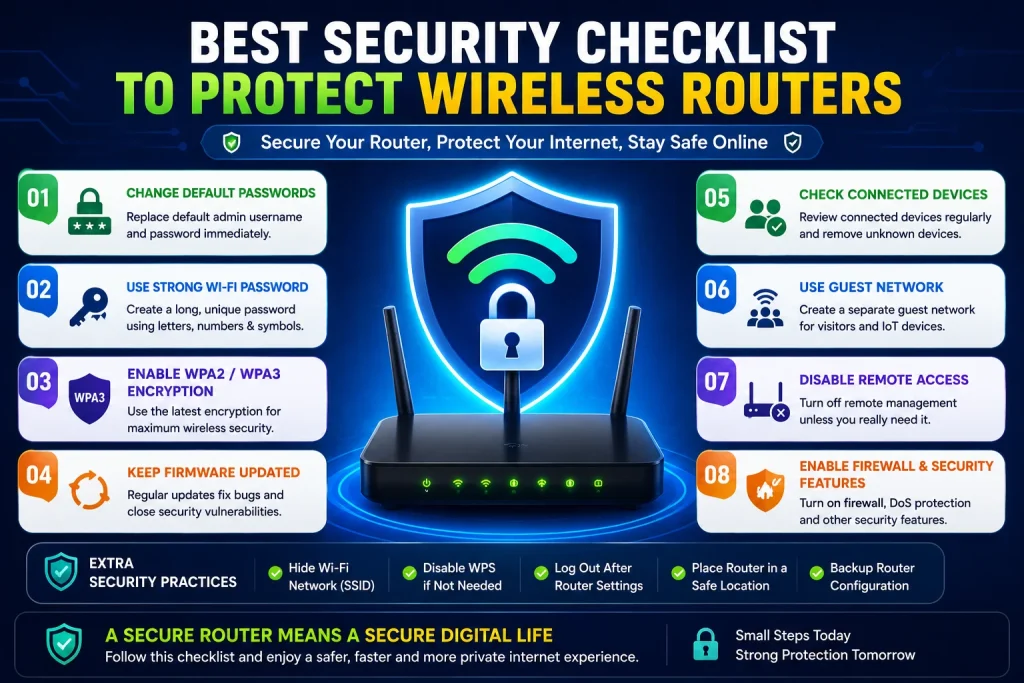
Best Security Checklist To Protect Wireless Routers
Following a simple router security checklist helps users protect wireless networks and improve internet safety more effectively every day.
Change Default Router Passwords Immediately
Default router login details are easy to find online, so changing them improves wireless network protection significantly.
Use Strong WiFi Passwords
Create long passwords using letters, numbers, and symbols for better wireless security and internet privacy protection safely.
Enable WPA2 or WPA3 Encryption
Modern wireless encryption helps protect internet connections and blocks unauthorized users from accessing private WiFi networks.
Update Router Firmware Regularly
Firmware updates improve router security, fix software bugs, and reduce wireless network security risks online safely.
Remove Unknown Connected Devices
Checking connected devices regularly helps users detect unauthorized network access and improve internet security quickly online.
Disable Unused Router Features
Turning off unused remote access and network features reduces possible router security vulnerabilities and online threats safely.
How To Improve Router Security Settings Safely
Improving router security settings helps users protect personal data, wireless networks, and connected devices from cyber risks safely.
Open Router Admin Settings Carefully
Access router settings using the correct login IP address and trusted internet browsers connected to your private network.
Change the Wireless Network Name
Unique WiFi names improve wireless identification and help users avoid confusing public internet connections nearby easily online.
Create Separate Guest Networks
Guest networks help visitors use internet connections safely without accessing important personal wireless network devices directly.
Enable Automatic Firmware Updates
Automatic router updates improve internet security and reduce risks caused by outdated router software vulnerabilities regularly online.
Turn Off WPS if Unnecessary
Disabling WPS improves router protection because some attackers target weak wireless setup security features easily online.
Check Router Security Monthly
Regular security checks help users identify unusual network activity and improve wireless internet protection over time safely.
Warning Signs Your Router Security May Be Weak
Weak router security can create internet privacy risks and allow unauthorized users to access wireless networks secretly online.
| Warning Sign | Possible Security Risk |
|---|---|
| Internet speed suddenly becomes slower | Unknown users may be connected to the wireless network |
| Unknown devices appear in router settings | Unauthorized users may have accessed private internet connections |
| Router settings change automatically | Hackers or malware may affect wireless network configurations |
| Frequent internet disconnections occur | Weak router security may create unstable wireless network performance |
| WiFi password stops working suddenly | Someone may have changed wireless network settings without permission |
| Browser redirects to strange websites | Router security issues may expose devices to harmful online threats |
| Router firmware remains outdated | Old software may contain security vulnerabilities and privacy risks |
| Public users know the WiFi password | Shared passwords increase unauthorized internet access possibilities |
Frequently Asked Questions
Many users want to improve router security and protect wireless networks from online threats, hackers, and unauthorized internet access safely.
Why is router security important for home internet users?
Router security protects personal information, connected devices, and wireless internet connections from unauthorized access and online threats. Secure router settings also improve internet privacy, network stability, and overall wireless safety for daily internet activities.
How often should users change WiFi passwords?
Users should update WiFi passwords regularly, especially after sharing internet access with guests or noticing suspicious network activity. Changing passwords every few months improves wireless security and helps block unauthorized internet usage safely online.
Is WPA3 better than WPA2 for router security?
Yes, WPA3 provides stronger wireless encryption and improved internet protection compared to older WPA2 security systems. Modern routers supporting WPA3 usually offer better privacy and safer wireless network connections for connected devices.
Can outdated router firmware create security problems?
Yes, outdated firmware may contain software vulnerabilities that hackers can target easily online. Regular firmware updates improve router protection, fix security issues, and enhance wireless internet performance for safer browsing and network usage.
What should users do if unknown devices appear on WiFi?
Users should remove unknown devices immediately, change WiFi passwords, and restart routers for better network protection. Checking router security settings regularly also helps prevent unauthorized internet access and wireless security risks online.
Is it safe to share WiFi passwords with many people?
Sharing WiFi passwords with too many people increases wireless security risks and internet misuse possibilities. Creating separate guest networks is usually safer for visitors without exposing important personal network devices directly.
Final Thoughts
A Router Security Checklist Tool helps users improve wireless internet safety using simple and effective security practices daily. Strong passwords, updated firmware, secure encryption, and regular network monitoring all play an important role in protecting routers from online threats. Users who follow proper router security habits can reduce hacking risks, improve internet privacy, and maintain stable wireless network performance more effectively. Simple security improvements also help protect personal information, smart devices, and online accounts connected through home or office internet networks. Regular router maintenance and safe internet habits are important for long-term wireless security and reliable internet usage.