
10.0.0.0.1 – 10.0.0.1 Admin Login and Router Setup
IP addresses like 10.0.0.1 and 192.168.1.1 are commonly used to open the router admin login page. These addresses help users access router settings directly from a browser without needing extra software. After opening the login page users can enter the router username and password to manage internet settings connected devices and wireless network controls easily. Many internet providers and router brands use these default IP addresses for quick and simple access.
The router admin panel is useful for changing WiFi passwords improving network security updating router names and fixing common internet connection problems. Users can also block unknown devices create a stronger password and improve overall network performance from the settings page. Understanding how router login systems work can help beginners manage home or office internet connections more safely and avoid many common network issues in daily use.
Router Login Quick Access Tool
Select your router IP address and open the admin login page quickly. This helps users access WiFi settings, change passwords, and manage router controls easily.
Common Router Admin Login IP Addresses and Default Router Details
Many routers use default IP addresses like 192.168.1.1 and 192.168.0.1 for quick admin access. This list helps users find common router login details easily for changing WiFi settings updating passwords and managing network security safely.
IP Address: 192.168.1.1
Username: admin
Password: admin
IP Address: 192.168.0.1
Username: admin
Password: admin
IP Address: 192.168.2.1
Username: admin
Password: 1234
IP Address: 192.168.1.254
Username: admin
Password: admin
IP Address: 192.168.10.1
Username: admin
Password: admin
What Is 10.0.0.1 and Why Do People Use It?
10.0.0.1 is a router login address that helps users open their internet settings page directly from a browser. Many popular router brands and internet providers use this address as the default gateway for network management. People usually enter it into Chrome Edge or another browser when they want to change WiFi settings or solve internet problems at home. It is commonly used in homes offices and small business networks because it gives quick access to important router controls.
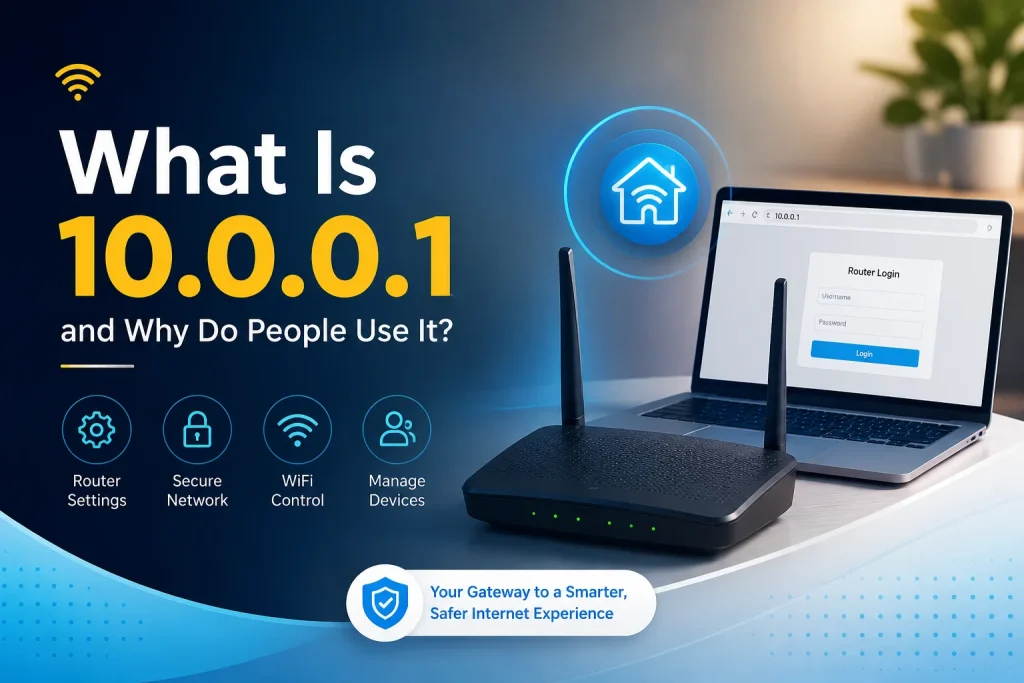
After opening the router admin page users can change the WiFi password update the network name improve security settings and manage connected devices more easily. It can also help fix slow internet speed or connection issues without needing technical support. Some users accidentally type 10.0.0.0.1 with an extra zero but that address is incorrect and normally leads to an error page. Using the correct address makes router access faster safer and much easier for beginners.
| Feature | Details |
|---|---|
| Correct Login IP | 10.0.0.1 |
| Incorrect Address | 10.0.0.0.1 |
| Common Router IP | 192.168.1.11 |
| Main Use | Router Admin Login |
| What Users Can Change | WiFi Name And Password |
| Popular Router Brands | Xfinity, Comcast, Cisco |
Helpful Router & WiFi Tools
Use these simple tools to manage router login, WiFi safety, speed, and security easily.
Router Login Quick Access Tool
Open router login pages quickly using common default IP addresses safely online.
Open ToolDefault Router Username and Password Checker
Find common default router login details for popular brands easily and safely.
Open ToolRouter Login Error Fix Tool
Fix common router login problems with simple and helpful troubleshooting steps.
Open Tool10.0.0.0.1 Mistake Fix Tool
Understand wrong router IP mistakes and open the correct login page.
Open ToolWiFi Password Strength Checker
Check WiFi password strength and improve wireless network security instantly online.
Open ToolRouter IP Finder Guide Tool
Find possible router IP addresses and open admin login pages quickly.
Open ToolWiFi Speed Improvement Checklist Tool
Check WiFi speed issues and get useful improvement tips instantly.
Open ToolRouter Reset Helper Tool
Get safe router reset guidance before changing important network settings.
Open ToolRouter Security Checklist Tool
Check router security settings and improve WiFi protection with easy tips.
Open ToolConnected Devices Safety Guide Tool
Check connected device safety and protect your wireless network from risks.
Open ToolHow To Access the 10.0.0.1 Admin Panel Easily
Opening the 10.0.0.1 admin panel helps users manage router settings WiFi passwords and network security quickly.
- Connect your mobile phone or computer with the router internet connection properly
- Open Chrome Firefox Safari, Edge or another browser on your connected device
- Type 10.0.0.1 carefully inside the browser address bar without unnecessary spaces
- Press the Enter button to open the router admin login page successfully
- Enter the correct router username and password shown on your router label
- Click the Login button and access important router settings and network controls
- Change your WiFi password regularly for better internet privacy and safer connections
- Check connected devices regularly to remove unknown users from your wireless network
- Restart the router once weekly to improve internet speed and overall network stability
- Avoid typing 10.0.0.0.1 because the extra zero opens an invalid router page
Why 10.0.0.0.1 Is an Incorrect Router Login Address
A large number of users accidentally enter 10.0.0.0.1 while trying to open their router settings page. At first glance the address looks correct which is why this mistake happens so often. The real router login IP used by most routers is 10.0.0.1 without the extra zero. Because of this small typing error the browser cannot connect with the router admin panel properly.
When the wrong address is entered, users usually see a blank page or browser error instead of WiFi settings. This often creates confusion during password changes internet setup or troubleshooting network problems. Checking the IP address carefully before pressing Enter can save time and help users access router controls more smoothly. Using the correct login address also makes router management easier for beginners and everyday internet users.
Default Username and Password for 10.0.0.1 Routers
Most routers using 10.0.0.1 come with default login details that help users access router settings during the first setup process. These usernames and passwords are usually printed on the router sticker or provided by the internet company for easier network management.
| Router Brand | Default Username | Default Password |
|---|---|---|
| Xfinity / Comcast | admin | password |
| Cisco | admin | admin |
| Arris | admin | password |
| Technicolor | admin | admin |
| LPB Piso WiFi | admin | admin1234 |
| Netgear | admin | password |
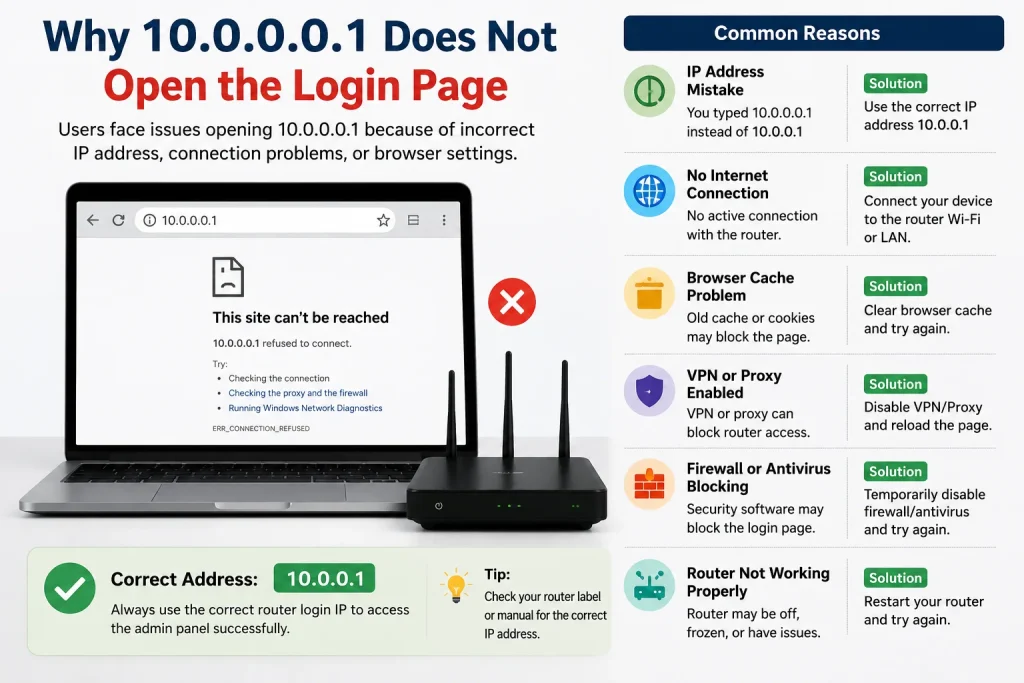
Why 10.0.0.0.1 Does Not Open the Login Page
Many users accidentally type 10.0.0.0.1 instead of the correct router login address while opening settings.
- 10.0.0.0.1 contains an extra zero and becomes an invalid router login address completely
- Most routers only support 10.0.0.1 for opening the admin settings page correctly
- Browsers cannot recognize incorrect router addresses and usually display connection error messages instantly
- Users often type extra numbers accidentally while entering router ip login addresses quickly online
- Wrong IP addresses prevent access to important WiFi and network management settings completely
- Always double-check the router IP before pressing the Enter button inside your browser
- Router stickers usually display the correct admin login address under the device clearly
- Using the correct IP address helps users access router settings without unnecessary login problems
- Clear browser cache sometimes if the incorrect address keeps loading automatically after mistakes
- Save the correct router address in bookmarks for faster future admin panel access
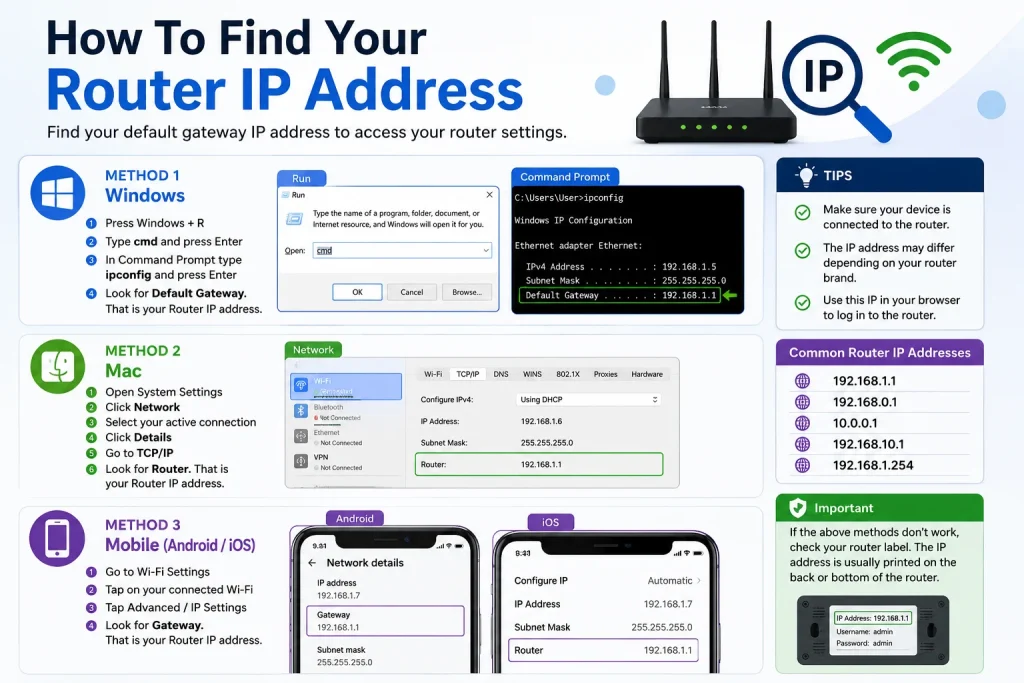
How To Find Your Router IP Address
Finding your router IP address helps users open router settings and manage internet connections more easily.
- Windows users can check Default Gateway inside Command Prompt network information settings easily
- Mac users can find router ip details through Network Settings inside System Preferences quickly
- Android phones display router gateway information inside connected WiFi network advanced settings pages
- iPhone users can open WiFi settings and view router information beside connected networks
- Most routers include default IP addresses printed clearly underneath the physical router device
- Common router IP addresses include 10.0.0.1, 192.168.1.1, and 192.168.0.1 for login access
- Correct router IP addresses help users access network settings without unnecessary connection problems
- Connected devices must use the same WiFi network before opening router admin settings properly
- Internet providers sometimes change default router addresses during network installation or router configuration processes
- Saving your router IP address helps users access settings faster during future troubleshooting situations
Linux
- Open Apps and launch the Terminal tool on your Linux device properly
- Type ifconfig and press Enter to check network connection information quickly
- Find the default router IP address inside the inet or gateway network section
- Copy the IP address and open it inside your preferred internet browser directly
Android
- Open Android settings and visit the WiFi or wireless network settings section first
- Tap your currently connected WiFi network to view internet connection information
- The router IP address appears inside the advanced network information section clearly
- Copy the address and paste it into your browser for admin panel access
iPhone and iPad
- Connect your Apple device with the same wireless router network connection properly first
- Open Settings and visit the WiFi section on your iPhone or iPad device
- Tap the connected wireless network currently active on your Apple device screen
- The router IP address appears inside the network details and information settings section
- Copy the address and open it inside Safari or another browser for login
MacOS
- Open Apple Settings and move to WiFi or wireless connection settings carefully first
- Select your connected network and open advanced network information settings properly there
- Click the IP or TCP/IP option to view detailed router connection information easily
- The router IP address appears clearly on your Mac screen for browser login access
Windows
- Open WiFi settings and select your connected wireless internet network carefully first
- You can also open Command Prompt for checking detailed network connection information manually
- Type ipconfig and press Enter to display your current network settings instantly
- The router IP address appears beside the Default Gateway section on your screen
- Copy the IP address and paste it into the browser for router login access
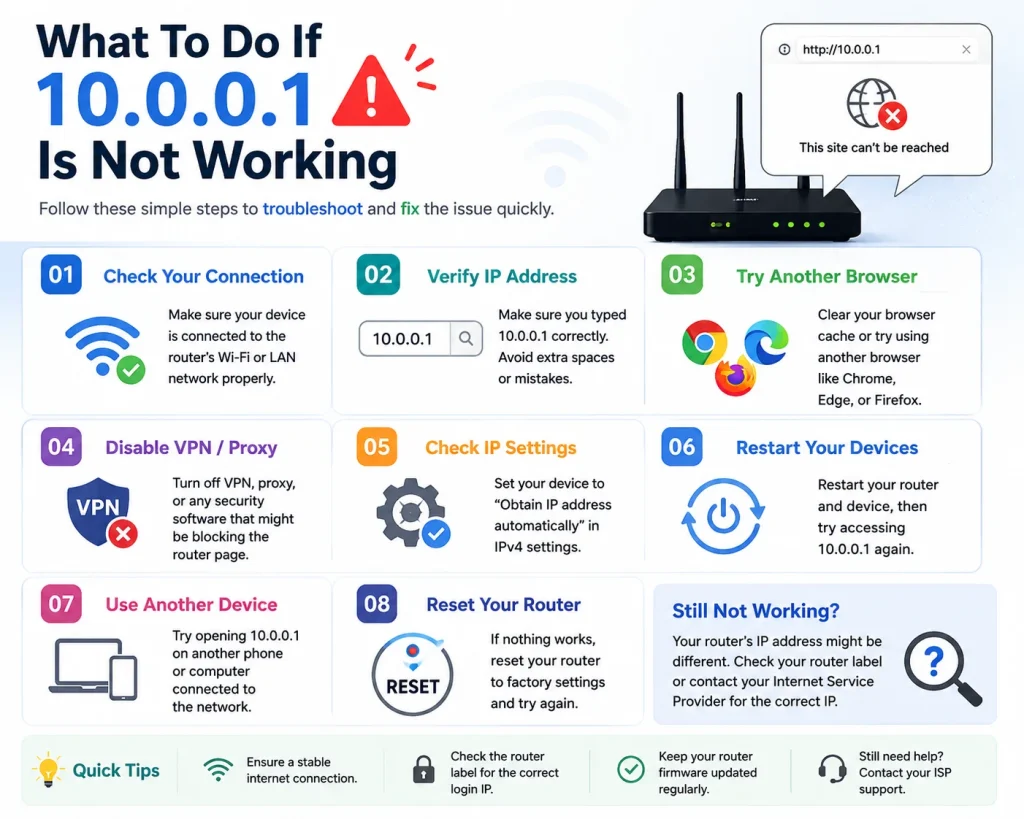
What To Do If 10.0.0.1 Is Not Working
Sometimes 10.0.0.1 does not open because of connection issues or incorrect router settings problems.
- Make sure your mobile or computer connects with the correct router network properly
- Check the router power light and confirm the internet device works normally first
- Type 10.0.0.1 carefully without extra spaces or unnecessary numbers inside the browser
- Avoid typing 10.0.0.0.1 because that incorrect address never opens router settings pages properly
- Restart your router and modem to refresh network connections and internet performance completely
- Clear browser cache and cookies if the router login page loads incorrectly repeatedly
- Try another browser like Chrome, Firefox, Edge, or Safari for router login access
- Disconnect active VPN services because they sometimes block local router network connections unexpectedly
- Check your router sticker for the correct default login IP address and credentials
- Reset the router carefully if login problems continue after trying all troubleshooting methods
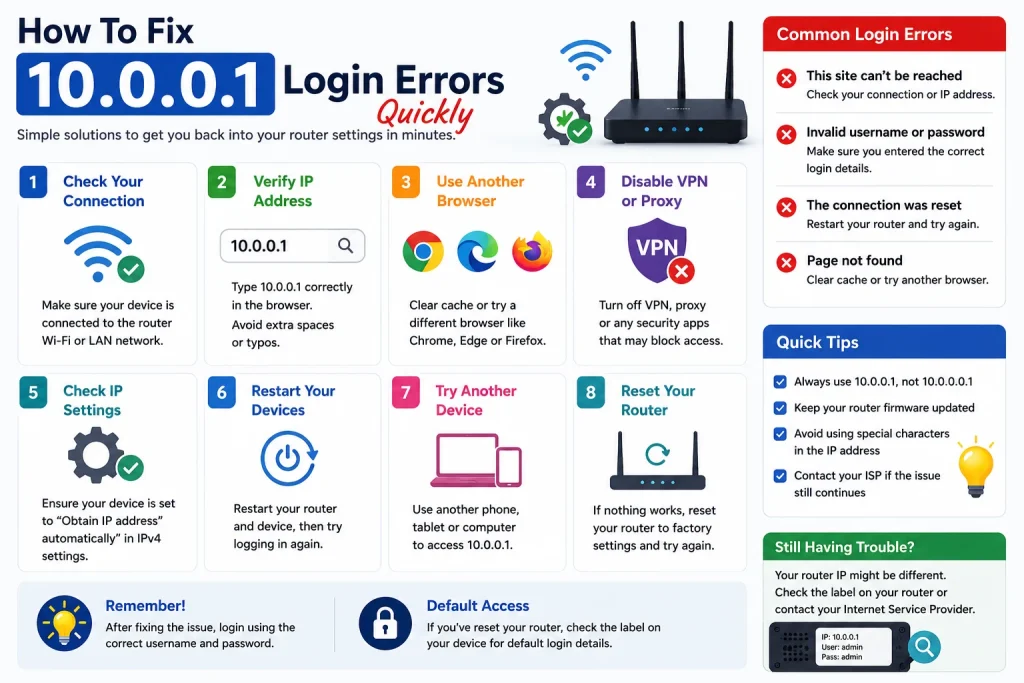
How To Fix 10.0.0.1 Login Errors Quickly
Router login errors usually happen because of incorrect settings, browser problems, or unstable network connections.
- Confirm your device connects with the same WiFi network as the router properly
- Enter 10.0.0.1 correctly inside the browser address bar without typing unnecessary extra numbers
- Restart your router once to refresh internet connections and temporary network settings completely
- Clear browser history, cache, and cookies if the login page stops loading properly
- Try another browser because some extensions sometimes block router login pages unexpectedly online
- Disable VPN applications temporarily because they may interrupt local router network access completely
- Check the router label carefully for updated usernames, passwords, and default login information
- Use wired LAN connections if wireless internet signals become unstable during router login attempts
- Update your browser regularly for smoother compatibility with modern router admin settings pages
- Reset the router carefully if login errors continue after trying different troubleshooting solutions
Common Mistakes While Opening 10.0.0.1 Router Login
Many users cannot access the router login page because of small typing or connection mistakes. Understanding these common problems helps users open router settings faster and avoid unnecessary login issues.
Typing 10.0.0.0.1 Instead of 10.0.0.1
Adding an extra zero creates an invalid router address and usually opens a browser error page instead.Using Mobile Data Instead of WiFi
Router settings only open when the device connects with the same router network properly.Entering Wrong Login Credentials
Incorrect usernames or passwords prevent users from opening the router admin dashboard successfully.Forgetting To Restart the Router
Temporary network problems sometimes disappear after restarting the router and internet modem once.Using an Outdated Browser
Older browsers may create loading problems while opening modern router admin login pages online.Difference Between 10.0.0.1 and 192.168.1.1
10.0.0.1 and 192.168.1.1 are both private IP addresses used for router admin login and network management. Different router brands and internet providers use these addresses to help users access WiFi settings security options and connected device controls more easily.
| Feature | 10.0.0.1 | 192.168.1.1 |
|---|---|---|
| Main Use | Router admin login | Router admin login |
| Common Users | Xfinity, Comcast routers | TP-Link, D-Link, Netgear |
| Network Type | Private IP address | Private IP address |
| Settings Access | WiFi and security settings | WiFi and security settings |
| Login Method | Browser-based access | Browser-based access |
| Default Purpose | Internet network management | Internet network management |
10.0.0.0.1 vs 10.0.0.1 – Understanding the Real Router IP
Many users become confused between 10.0.0.0.1 and 10.0.0.1 while opening router settings in a browser. The correct router login address is usually 10.0.0.1, while 10.0.0.0.1 is an invalid address caused by typing mistakes.
| Feature | 10.0.0.0.1 | 10.0.0.1 |
|---|---|---|
| IP Status | Incorrect router address | Correct router login IP |
| Browser Result | Shows error page | Opens admin login panel |
| Main Problem | Extra zero added mistakenly | Valid private router IP |
| Router Access | Does not work properly | Opens router settings successfully |
| Common Usage | Typing mistake by users | Used by many router brands |
| Admin Functions | Cannot manage router settings | Allows full router management |
| Network Access | Invalid network address | Default gateway for routers |
| User Recommendation | Avoid using this address | Use for router admin login |
Supported Router Brands Using 10.0.0.1
Many internet providers and router companies use 10.0.0.1 as the default gateway for router login and network management. Users can access WiFi settings, security controls, and internet configuration options through this common router IP address easily.
| Router Brand | Common Use |
|---|---|
| Xfinity | Home internet router management |
| Comcast | WiFi settings and password changes |
| Cisco | Business and home network controls |
| Arris | Cable modem and router settings |
| Technicolor | Internet and wireless configuration |
| LPB Piso WiFi | Public WiFi management systems |
| Netgear | Router security and device controls |
| SMC Networks | Broadband and wireless setup |
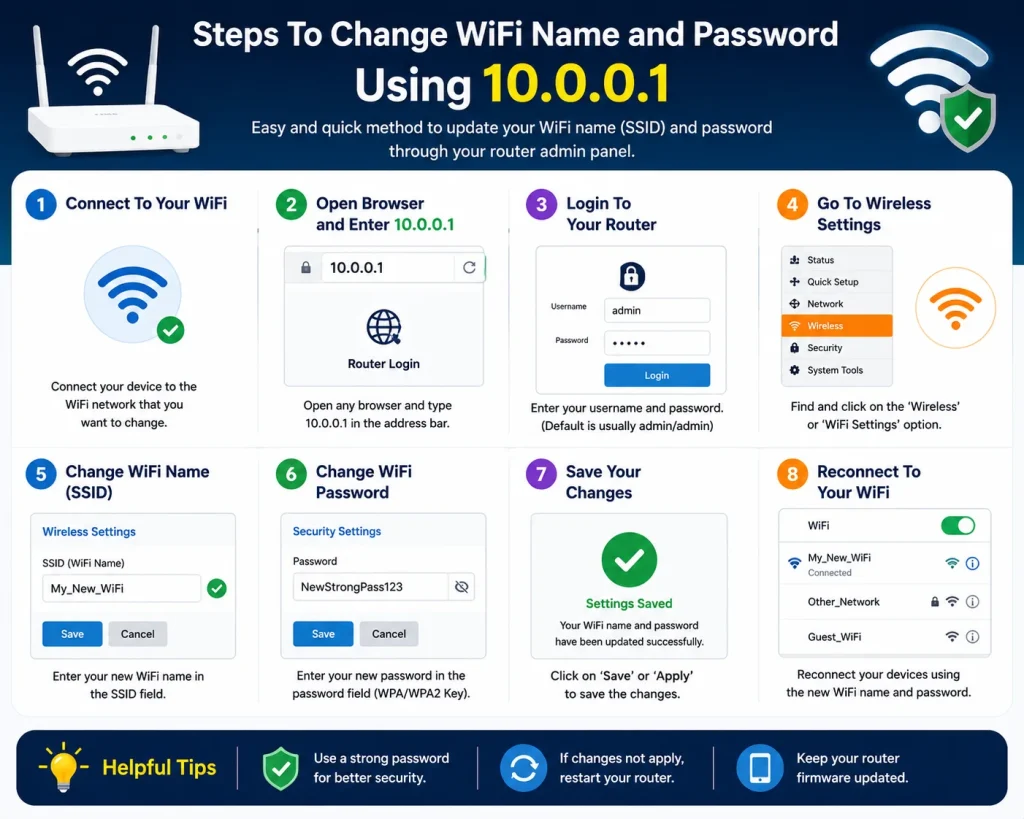
Steps To Change WiFi Name and Password Using 10.0.0.1
Changing your WiFi name and password regularly helps improve internet security and prevents unknown devices from using your network connection without permission. Users can manage these settings easily through the 10.0.0.1 router admin panel.
Open the Router Login Page
Enter 10.0.0.1 into your browser address bar and open the admin login screen.
Enter Router Username and Password
Use the correct admin login details printed on your router sticker or manual carefully.
Open Wireless or WiFi Settings
Find the wireless settings section inside the router dashboard for network customization options.
Change the WiFi Network Name
Update your WiFi name with something simple, unique, and easy for family identification.
Create a Strong New Password
Use strong passwords containing letters, numbers, and symbols for better wireless network protection.
Save the Updated Router Settings
Click the Save or Apply button after making changes inside the router settings panel.
Reconnect Your Devices Again
Connect phones, laptops, and smart devices using the newly updated WiFi password successfully.
Best Ways To Secure Your Router Network Settings
Protecting router settings is important for keeping your internet connection private, stable, and safe from unknown users. Simple security changes can help users improve network protection and reduce unauthorized access problems at home or office networks.
Change the Default Admin Password
Replace default router passwords with stronger and unique login credentials for better account protection.Use WPA2 or WPA3 Security
Modern WiFi encryption helps block unauthorized users from accessing your wireless internet connection easily.Update Router Firmware Regularly
Firmware updates fix security bugs and improve router stability, speed, and overall network performance.Disable Remote Router Access
Turn off remote administration settings unless you really need outside access to router controls.Create a Separate Guest WiFi Network
Guest networks protect your personal devices while allowing visitors temporary internet access safely.Remove Unknown Connected Devices
Check connected devices regularly and block suspicious users from using your internet connection immediately.Turn Off WPS If Unnecessary
Disabling WPS reduces security risks and prevents unauthorized devices from connecting automatically.Use a Strong WiFi Password
Create longer passwords using numbers, symbols, and uppercase letters for stronger network security protection.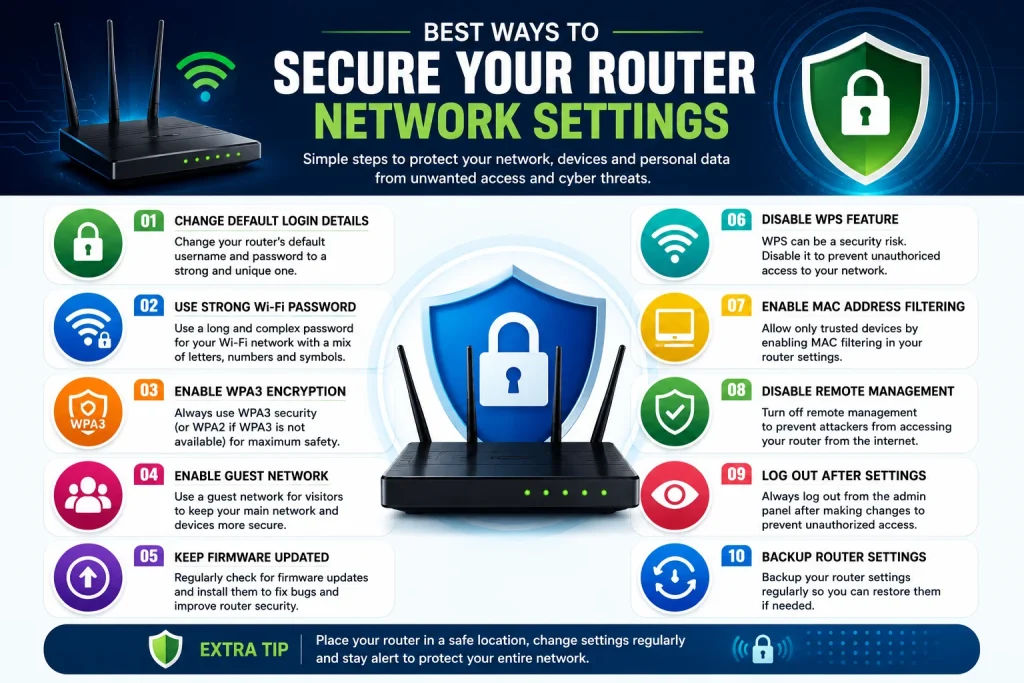
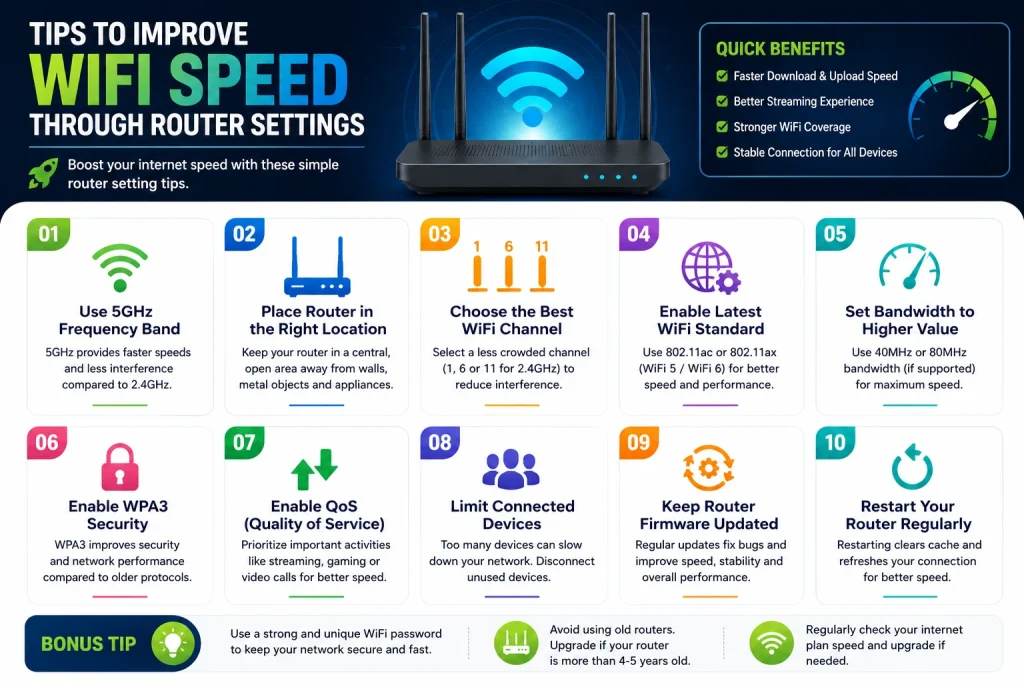
Tips To Improve WiFi Speed Through Router Settings
Improving router settings can help users enjoy faster internet speed and more stable wireless connections daily.
- Place the router in open spaces for stronger and wider WiFi signal coverage
- Restart the router regularly to refresh internet connections and improve network performance stability
- Change crowded WiFi channels to reduce wireless interference from nearby internet networks completely
- Update router firmware regularly for better speed, improved security, and smoother internet performance
- Disconnect unused devices because too many connections can reduce wireless internet speed significantly
- Use WPA2 or WPA3 security settings for safer and more stable internet connections daily
- Keep routers away from microwaves, Bluetooth devices, and thick walls blocking wireless signals
- Upgrade older routers if your current device cannot handle modern internet speed requirements
- Limit background downloads because heavy internet usage can slow browsing and streaming performance badly
- Check connected devices regularly and block unknown users using your wireless internet connection
Advanced Router Settings Manage Through 10.0.0.1
The 10.0.0.1 router admin panel gives users access to many advanced network settings that help improve internet performance security and device management. After logging in users can change WiFi channels to reduce signal interference and improve wireless speed in different areas of the home. Many routers also allow bandwidth control settings helping users prioritize gaming video streaming or office work for smoother internet usage during busy hours.
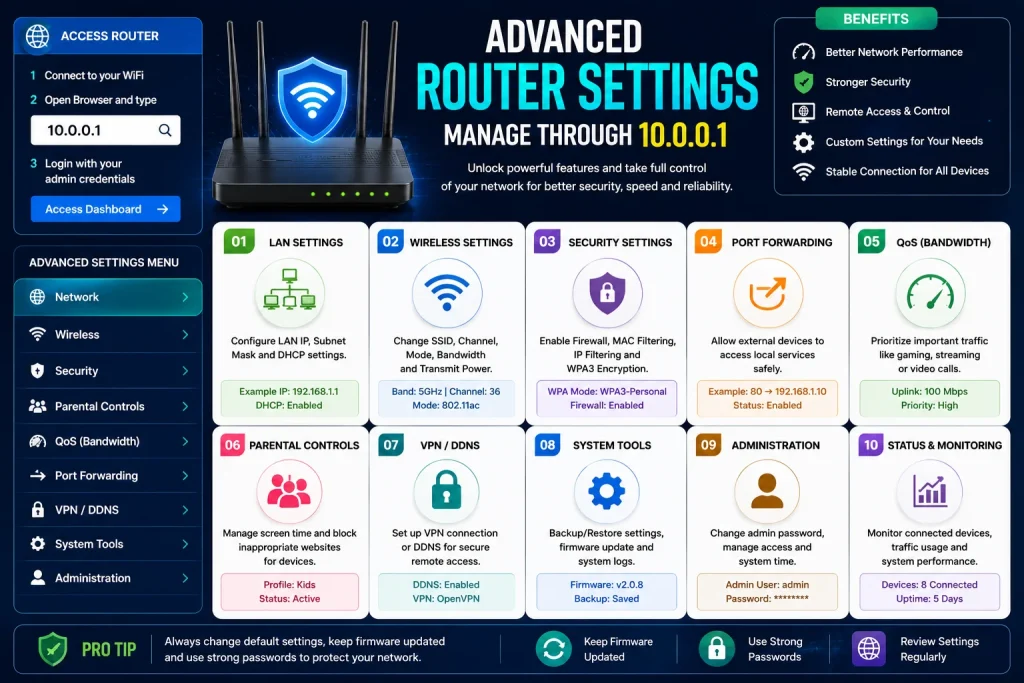
Users can also manage parental controls block unknown devices, create guest networks and set stronger wireless security settings directly from the router dashboard. Some advanced routers include port forwarding options for online gaming remote applications and smart home devices. Regularly checking these settings helps users maintain a safer faster and more stable internet connection for everyday browsing streaming and online activities.
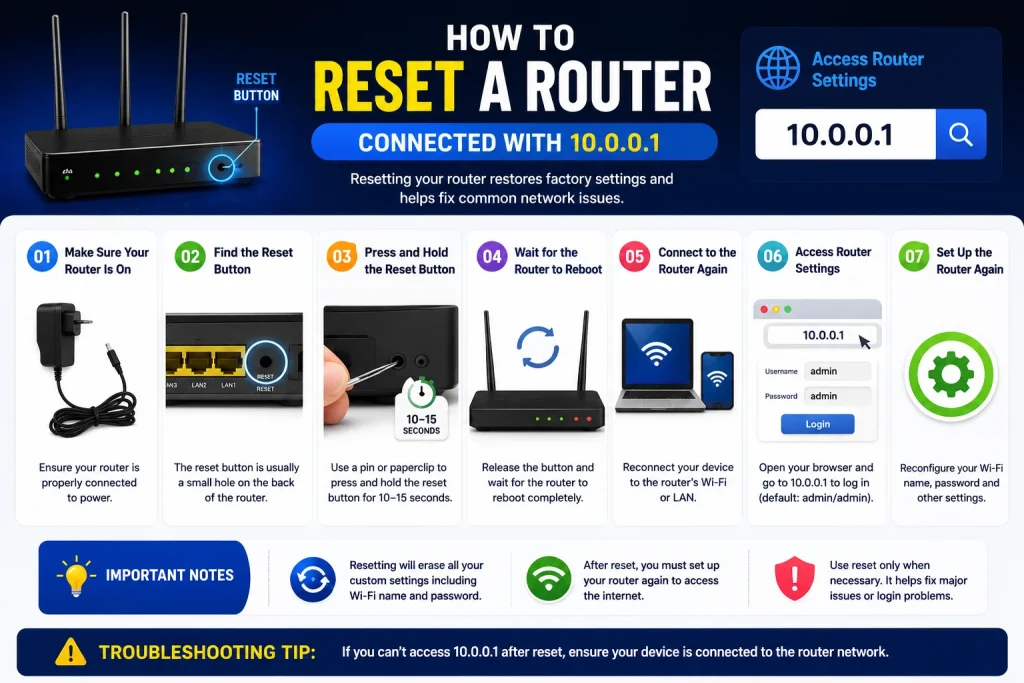
How To Reset a Router Connected With 10.0.0.1
- Locate the small reset button placed behind or underneath the wireless router device
- Use a paper clip or pin for pressing the router reset button properly
- Hold the reset button for almost ten seconds until router lights start blinking
- Wait patiently while the router removes old settings and restarts automatically again completely
- Open 10.0.0.1 inside your browser after the router reset process finishes successfully
- Enter default router login details printed clearly on the router sticker carefully again
- Create a new WiFi name and stronger password during the router setup process
- Reconnect all phones, laptops, and smart devices using updated wireless network credentials
- Resetting routers helps solve internet issues, login errors, and unstable network problems effectively
- Avoid resetting routers unnecessarily because factory resets remove previous customized network settings completely
Best Security Tips To Keep Your WiFi Network Safe
- Change default router usernames and passwords for stronger internet network security protection immediately
- Create longer WiFi passwords using numbers, symbols, and uppercase letters for better protection
- Update router firmware regularly because security updates fix hidden network vulnerabilities automatically online
- Disable unused router features like WPS and remote management for safer wireless connections
- Check connected devices regularly and remove unknown users from your internet network quickly
- Create separate guest WiFi networks for visitors instead of sharing your main connection
- Place the router safely inside your home to reduce unauthorized wireless signal access
- Avoid sharing router passwords publicly with unnecessary users or unknown nearby internet connections
- Use WPA2 or WPA3 encryption settings for stronger and more stable wireless network protection
- Restart the router occasionally to maintain smoother internet performance and stable network connections
Common Issues and Troubleshooting
Users sometimes face router login problems while opening 10.0.0.1 or changing network settings. Most issues happen because of typing mistakes incorrect passwords weak connections or browser-related problems. Understanding these common errors can help users access the router admin panel more easily and avoid unnecessary internet troubleshooting confusion.
Problem: Incorrect IP Address
Solution
Many users accidentally type the wrong router IP address while opening the admin login page. Small typing mistakes like 10.0.0.0.1 instead of 10.0.0.1 can stop the browser from loading router settings properly. Always check the address carefully before pressing Enter in the browser search bar.
If you are unsure about your router IP address you can find it through WiFi network or device settings easily. Using the correct router IP helps users access network controls WiFi settings and security options without unnecessary connection errors.
Problem: Forgot Router Username and Password
Solution
Router login credentials are required for opening the admin dashboard and managing internet settings. If you forget the username or password the router panel will not open successfully. In this situation users can reset the router to restore default login information again.
Most routers include a small reset button placed behind or underneath the device. Press and hold the button carefully for several seconds until the router lights start blinking. After the reset process finishes the router returns to factory settings and allows users to log in using default credentials again.
Problem: Router Login Errors
Solution
Login problems may happen when the device is not connected with the router network properly. Before opening the admin panel make sure your mobile phone laptop or computer connects with the same WiFi network or LAN cable connection successfully.
Weak internet signals damaged cables browser cache or active VPN services may also create router login problems. Restarting the router clearing browser cache and reconnecting the network often help users solve most router access errors quickly and safely.
Frequently Asked Questions About 10.0.0.1
What Is 10.0.0.1 Used For?
10.0.0.1 is a private router login address used for opening admin settings changing WiFi passwords managing connected devices updating security settings and controlling home or office internet network configurations easily.
Why Is 10.0.0.1 Not Opening Properly?
The router page may not open because of incorrect IP addresses browser cache problems weak network connections active VPN services or typing 10.0.0.0.1 instead of the correct router login address.
How Can I Find My Router Username and Password?
Most routers include default login usernames and passwords printed clearly on stickers placed underneath or behind the router device for easier setup troubleshooting and wireless network management during the first login process.
Can I Change My WiFi Password Through 10.0.0.1?
Yes users can easily change WiFi passwords through the router admin panel after opening 10.0.0.1 inside a browser and accessing wireless or network security settings using valid login credentials.
Is 10.0.0.1 the Same as 192.168.1.1?
Both are private router login IP addresses used for network management but different router brands and internet providers choose different default gateway addresses depending on their router configuration systems.
How Do I Reset a Router Using 10.0.0.1?
Users can reset routers by pressing the reset button for several seconds or restoring default settings directly through the 10.0.0.1 admin panel when login or network problems continue repeatedly.
Final Thoughts
Understanding how 10.0.0.1 works can make router management much simpler for everyday internet users. This router login address helps people access important network settings like WiFi passwords security controls connected devices and internet configuration options directly from a browser. Even beginners can manage basic router settings easily after learning the correct login process and troubleshooting methods.
Keeping router settings updated is also important for maintaining better internet speed stronger security and stable wireless connections. Simple actions like changing default passwords updating firmware and checking connected devices regularly can improve overall network performance significantly. Using the correct router login address and following safe network practices can help users avoid common internet problems and keep their home or office WiFi connection running smoothly every day.