
10.0.0.1 – 10.0.0.0.1 Admin Login and Router Setup
Last Updated: May 2026 | Tested on LPB Piso WiFi, Adopisoft, Xfinity, Cisco, Arris
10.0.0.1 is a private IPv4 gateway address used as the default login portal for a wide range of home routers, business networks, and — most notably in the Philippines — Piso WiFi machines. When you type this address into your browser, you reach the router’s admin dashboard where you can control every aspect of your network: Wi-Fi passwords, connected devices, bandwidth limits, session pricing, and security settings.
Unlike a public IP address visible to the entire internet, 10.0.0.1 is a private IP address that only works within your local network. It belongs to the Class A private range (10.0.0.0–10.255.255.255), defined by RFC 1918, and is completely inaccessible from outside your connection — making it safe for internal router management.
Common mistake: Always type http://10.0.0.1 in your browser address bar. If you type it in Google Search, it will only search the internet instead of opening your router login page.
How to Login to 10.0.0.1
Follow these quick and simple steps to access your router admin panel safely.
Connect to Router
Connect your device using WiFi or a LAN cable before opening the router page.
Open Browser
Open any browser like Chrome, Firefox, Safari, or Microsoft Edge.
Enter 10.0.0.1
Type http://10.0.0.1 in the address bar at the top of your browser.
Login Details
Enter your router username and password to continue.
Open Admin Panel
Click the Login button and your router dashboard will open.
Common Mistake
Typing 10.0.0.1 in the Google search bar will only open search results. Always use the browser’s address or URL bar at the very top.
What is 10.0.0.1?
10.0.0.1 is a private IP address that opens your router’s admin panel. When you enter it in a browser, it takes you to a local control center where you can manage your WiFi password, network name, connected devices, and security settings.
It belongs to the Class A private range (10.0.0.0–10.255.255.255). This range only works inside your local network — it’s never exposed to the public internet. That’s exactly why router manufacturers use it as a default gateway: only devices on your network can reach it.
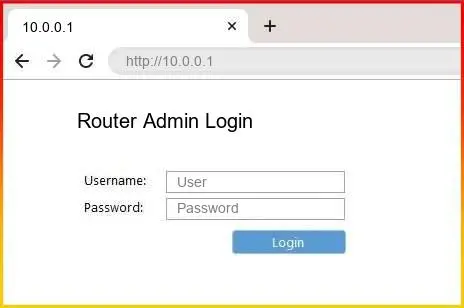
In the Philippines, this address has a second important role — it’s the admin dashboard for Piso WiFi vending machines like LPB and Adopisoft.
DetailInfoCorrect IP10.0.0.1Common Typo10.0.0.0.1 (extra zero — won’t work)Primary UseRouter admin panel loginPhilippines UseLPB Piso WiFi + Adopisoft dashboardCommon BrandsXfinity, Comcast, Cisco, Arris, TP-Link
Step-by-Step Login Guide
Getting into your router admin panel is simple and usually takes less than one minute. Follow these quick steps to open the 10.0.0.1 login page safely.
Connect your phone, laptop, or PC to the router’s WiFi or use a LAN cable.
Open any browser such as Chrome, Firefox, Safari, or Edge.
Click the address bar at the top, where the website URL appears.
Type http://10.0.0.1 and press Enter.
Wait for the router login page to appear on your screen.
Enter your router username and password from the default login table.
Click Login or OK to continue.
You are now inside the admin panel and can manage router settings.
WHAT YOU CAN CONTROL FROM THE ADMIN PANEL
Wi-Fi Password
Change your network name and password anytime.
Session Timer
Set how long each Piso WiFi session lasts.
Connected Devices
See who’s using your network and block anyone.
Bandwidth Control
Limit speed per user for fair sharing.
Security Settings
Enable WPA2/WPA3 encryption and firewall.
Auto Reboot
Schedule nightly reboots to keep it running fresh.
Default Username and Password — By Brand
Every brand ships with different default credentials. Check the table below for yours. If you’ve already changed the password and forgot it, a factory reset is the only fix.
| Brand | Default Username | Default Password |
|---|---|---|
| Xfinity / Comcast | admin | password |
| LPB Piso WiFi | admin | admin1234 |
| Adopisoft Piso WiFi | administrator | admin1234 |
| Cisco | admin | admin |
| Arris | admin | password |
| Technicolor | admin | admin |
| Netgear (some models) | admin | password |
| Comcast (alt) | cusadmin | highspeed |
Piso WiFi Philippines — Complete Admin Guide
Across the Philippines — sari-sari stores, waiting sheds, palengkes, jeepney terminals — Piso WiFi machines are everywhere. For operators, 10.0.0.1 is their business dashboard. Everything runs through it: coin rates, session time, bandwidth, payments, and revenue tracking.
What You Can Control From the Admin Panel
– Set session duration — how many minutes per peso
– Configure coin-based and digital payments (GCash, Maya)
– Set bandwidth limits per user
– Monitor connected devices in real time
– View revenue and transaction history
– Enable or disable the Pause Time feature
– Generate voucher codes
– Configure MAC filtering and firewall rules
– Schedule auto-reboot (3 AM is the standard recommendation)
– Update router firmware
How to Log In to Piso WiFi Admin
Connect your phone or laptop to the Piso WiFi network.
Open your browser and type http://10.0.0.1
LPB Piso WiFi
Username: admin
Password: admin1234
Adopisoft
Username: administrator
Password: admin1234
Once inside, configure your settings safely.
Philippines Pricing Guide — Common Rates in 2026
Operators set their own rates. There’s no national standard. These are the most common ranges you’ll find:
| Amount | Standard Time | Premium Time | Best For |
|---|---|---|---|
| ₱1 | 5 minutes | 10 minutes | Quick checks |
| ₱5 | 30 minutes | 1 hour | Light browsing |
| ₱10 | 1 hour | 2 hours | Social media |
| ₱20 | 3 hours | 5 hours | Students / WFH |
| ₱50 | Overnight | Unlimited* | Heavy users |
Unlimited refers to session time. Bandwidth limits are set separately by the operator.
How to Enable GCash and Maya Payments
Younger customers often don’t carry coins. Adding digital payment options can noticeably increase your revenue:
1. Log in to the admin panel at http://10.0.0.1
2. Go to Payment Settings or Billing
3. Enable the digital payment option
4. Link your GCash number or Maya merchant account
5. Generate a QR code and display it on or near the machine
6. Run a test transaction to confirm payments are coming through
Pause Time Feature — What It Does and How to Use It
Pause Time is one of the most misunderstood Piso WiFi features. It does not disconnect the internet. It simply pauses your session timer.
Why It Matters
Say you buy ₱10 worth of time — that’s one hour. You use 30 minutes, then set your phone down. Without Pause Time, your remaining 30 minutes ticks away unused. With Pause Time enabled, you can stop the clock and resume later.
Enabling Pause Time (Admin Side)
1. Log in at http://10.0.0.1
2. Go to Piso WiFi Settings or Portal Settings
3. Find Pause Time or Session Pause
4. Turn it on and save
Using Pause Time (Customer Side)
1. Connect to the Piso WiFi network
2. Open http://10.0.0.1 in your browser
3. The customer portal shows your balance and remaining time
4. Tap Pause — the timer stops
5. Tap Resume when you’re ready to continue
Note: Pause Time only works if the operator has enabled it. Not all machines have this feature active.
Vendo Machine Setup — LPB and Adopisoft
LPB Piso WiFi Setup
1. Power on the router and connect via LAN
2. Open http://10.0.0.1 in your browser
3. Log in: admin / admin1234
4. Go to Vendo Settings
5. Set coin value — e.g., 1 coin = 5 minutes
6. Configure session rates for ₱1, ₱5, ₱10, etc.
7. Enable Pause Time
8. Set your WiFi name (SSID) and password
9. Schedule auto-reboot at 3 AM
10. Save — your machine is ready
Adopisoft Piso WiFi Setup
1. Connect your Adopisoft router
2. Log in at http://10.0.0.1 — Username: administrator / Password: admin1234
3. Configure the captive portal
4. Set rate plans (default is ₱1 = 5 minutes)
5. Set up the voucher system if needed
6. Apply per-user bandwidth limits
7. Add payment methods
8. Insert a test coin to verify time is credited correctly
Revenue Tips for Piso WiFi Operators
Smart pricing, portal ads, and the right router can help increase daily Piso WiFi earnings.
Use Tiered Pricing
Single-rate pricing leaves money on the table. Offer multiple packages so every type of customer has a plan that fits their budget.
Enable Ads on the Login Portal
Best Routers for Philippines Piso WiFi 2026
Choosing the right router depends on your area, internet source, number of users, and budget.
| Model | Best For | Connection | Est. Price |
|---|---|---|---|
| TP-Link TL-MR6400 | Standard vendo setup | 4G LTE + SIM slot | ₱3,500–5,000 |
| TP-Link Archer Series | High-capacity setup | Fiber/DSL dual-band | ₱2,500–4,000 |
| TP-Link TL-MR100 | Mobile or portable setup | 4G LTE portable | ₱2,000–3,000 |
| Generic LPB Bundle | Budget starter setup | Cable/fiber | ₱1,500–2,500 |
Common Problems and Fixes
Common 10.0.0.1 Login Problems & Fixes
Page won’t load
Make sure your device is connected to the correct router. Turn off mobile data.
Type http://10.0.0.1 in the address bar — not the search bar.
Typed 10.0.0.0.1 by mistake
That extra zero makes it an invalid address. The correct one is
10.0.0.1 — four numbers, three dots.
Wrong username or password
Check the sticker on the back or bottom of the router. If you changed the password and forgot it, hold the reset button for 10 seconds to restore factory defaults.
Page loads but settings won’t save
Clear your browser cache. Try incognito mode. Switch to a different browser.
VPN is active
Turn off your VPN. It can block access to local network addresses
like 10.0.0.1.
Wrong router’s panel is opening
If you have multiple routers, an IP conflict may be the cause.
Turn off one router and try again. Or open Command Prompt and type
ipconfig — check the Default Gateway line.
Piso WiFi admin panel won’t open
Confirm you’re connected to the Piso WiFi network — not mobile data.
Type http://10.0.0.1 manually in your browser.
The portal sometimes doesn’t auto-redirect.
Settings reset after every restart
A factory reset and a soft reboot are different. Factory reset wipes everything. If settings keep disappearing, check for a firmware update.
Page loads slowly
Restart the router. Clear your browser cache. Try connecting via Ethernet cable directly.
10.0.0.1 is not your router’s address
Not all routers use this IP. Find yours: on Windows,
open Command Prompt and type ipconfig.
Look for Default Gateway.
That’s your router’s actual IP.
Find Your Router’s IP Address in these devices
How to Find Your Router IP
Windows
- Open Command Prompt by searching cmd in Start.
- Type
ipconfigand press Enter. - Find Default Gateway — that is your router IP.
Android
- Go to Settings → WiFi.
- Tap your connected network.
- Check Advanced or Network Details for Gateway IP.
iPhone / iPad
- Go to Settings → WiFi.
- Tap the (i) icon next to your network.
- Your router IP will be listed there.
Mac
- Go to System Settings → Network → WiFi.
- Click Details → TCP/IP.
- Your router IP is shown under Router.
How to Change Your WiFi Password
1. Log in at http://10.0.0.1
2. Open Wireless Settings or WiFi section
3. Find the Password or Security field
4. Enter a new password
5. Select WPA2 or WPA3 encryption (never use WEP)
6. Click Save
7. Reconnect all your devices with the new password
Strong password tips:
– At least 12 characters
– Mix uppercase, lowercase, numbers, and symbols
– Avoid your name, birthday, or sequences like 12345
– Change it every 3–6 months
How to Change Your WiFi Password
1. Log in at http://10.0.0.1
2. Open Wireless Settings or WiFi section
3. Find the Password or Security field
4. Enter a new password
5. Select WPA2 or WPA3 encryption (never use WEP)
6. Click Save
7. Reconnect all your devices with the new password
Strong password tips:
– At least 12 characters
– Mix uppercase, lowercase, numbers, and symbols
– Avoid your name, birthday, or sequences like 12345
– Change it every 3–6 months
Frequently Asked Questions
Frequently Asked Questions
What’s the difference between 10.0.0.1 and 192.168.1.1?
Both are private IP addresses used for router admin login. The difference is just which brands use which. Xfinity, Comcast, Cisco, and LPB Piso WiFi use 10.0.0.1. TP-Link, D-Link, and Netgear typically use 192.168.1.1 or 192.168.0.1.
Why doesn’t 10.0.0.0.1 work?
It has an extra zero — that makes it an invalid IP address. The correct address is 10.0.0.1.
How does a Piso WiFi customer use Pause Time?
Open 10.0.0.1 in your browser while connected to the Piso WiFi network. On the customer portal, tap Pause to stop the timer. Tap Resume when you’re ready to continue. This only works if the operator has the feature enabled.
Does 10.0.0.1 work with all Philippine ISPs?
Yes. 10.0.0.1 is a local network address, completely independent of your ISP. It works the same whether you’re on PLDT, Globe, Converge, Sky, or a 4G LTE connection.
What are the default Piso WiFi passwords?
LPB: admin / admin1234.
Adopisoft: administrator / admin1234.
If these don’t work, the credentials were already changed —
check the router sticker or do a factory reset.
What happens when I factory reset my router?
All custom settings are wiped — WiFi name, password, Piso WiFi rates, everything. The router returns to factory defaults. A simple restart only refreshes the connection and leaves your settings intact.
Can I access 10.0.0.1 from my phone?
Yes. Connect your phone to the router’s WiFi, turn off mobile data,
and type http://10.0.0.1 in your browser.
The process is identical to a desktop.
Last updated: May 2026. Guide covers LPB Piso WiFi, Adopisoft, Xfinity, Cisco, Arris, and TP-Link routers.
Piso WiFi Admin Guides
Complete setup and login guides for Piso WiFi in the Philippines
Popular Router Login IP Addresses
Find the admin login page for your router by IP address
Router Brand Login Guides
Admin login guides for popular router brands
Router Tools & Quick Guides
Manage your home or Piso WiFi network easily